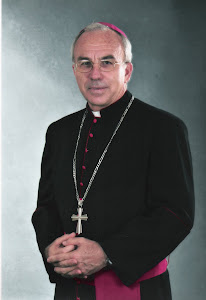
(Vatican Radio) Pope Francis on Saturday addressed the participants in the Plenary Assembly of the Pontifical Council for Social Communications.
Pope Francis said the goal of the Church for its communications efforts is “to understand how to enter into dialogue with the men and women of today in order to appreciate their desires, their doubts and their hopes.”
The Holy Father said we must examine if the communications of the Church are helping others to meet Christ.
“The challenge is to rediscover, through the means of social communication as well as by personal contact, the beauty that is at the heart of our existence and our journey, the beauty of faith and of the encounter with Christ,” he said.
Below is the full text of Pope Francis' remarks
Dear Brothers and Sisters, good morning!
I greet you and I thank you for your work and commitment to the important sector of social communications – but having spoken to Archbishop Celli, I must change “sector” to the important “dimension of life” which is that of social communications. I wish to thank Archbishop Claudio Maria Celli for the greeting that he extended to me on your behalf. I would like to share some thoughts with you.
First of all: the importance of social communications for the Church. This year is the fiftieth anniversary of the Conciliar Decree Inter Mirifica. This anniversary is more than a commemoration; the Decree expresses the Church’s attentiveness towards communication and all its instruments, which are also important in the work of evangelisation. But towards its instruments – communication is not an instrument! It’s something else. In the last few decades, the various means of communication have evolved significantly, but the Church’s concern remains the same, taking on new forms and expressions. The world of social communications, more and more, has become a “living environment” for many, a web where people communicate with each other, expanding the boundaries of their knowledge and relationships (cf. Benedict XVI, Message for the 2013 World Communications Day). I wish to underline these positive aspects, although we are all aware of the limitations and harmful factors which also exist.
In this context – and this is the second reflection – we must ask ourselves: what role should the Church have in terms of its own practical means of communication? In every situation, beyond technological considerations, I believe that the goal is to understand how to enter into dialogue with the men and women of today, in order to appreciate their desires, their doubts, and their hopes. They are men and women who sometimes feel let down by a Christianity that to them appears sterile, struggling precisely to communicate the depth of meaning that faith gives. We do in fact witness today, in the age of globalisation, a growing sense of disorientation and isolation; we see, increasingly, a loss of meaning to life, an inability to connect with a “home”, and a struggle to build meaningful relationships. It is therefore important to know how to dialogue, and how to enter, with discernment, into the environments created by new technologies, into social networks, in such a way as to reveal a presence that listens, converses, and encourages. Do not be afraid to be this presence, expressing your Christian identity as you become citizens of this environment. A Church that follows this path learns how to walk with everybody! And there’s also an ancient rule of the pilgrims, that Saint Ignatius includes, and that’s why I know it! In one of his rules, he says that anyone accompanying a pilgrim must walk at the same pace as the pilgrim, not ahead and not lagging behind. And this is what I mean: a Church that accompanies the journey, that knows how to walk as people walk today. This rule of the pilgrim will help us to inspire things.
The third: it’s a challenge that we all face together in this environment of social communications, and the problem is not principally technological. We must ask ourselves: are we capable of bringing Christ into this area, or rather, of bringing about the encounter with Christ? To walk with the pilgrim through life, but as Jesus walked with the pilgrims of Emmaus, warming their hearts and leading them to the Lord? Are we capable of communicating the face of a Church which can be a “home” to everyone? We talk about the Church behind closed doors. But this is more than a Church with open doors, it’s more! Finding “home” together, building “home”, building the Church. It’s this: building the Church as we walk. A challenge! To lead to the rediscovery, through means of social communication as well as by personal contact, of the beauty which is at the heart of our existence and our journey, the beauty of faith, the beauty of the encounter with Christ. Even in the context of social communications, the Church is required to bring warmth, to warm hearts. Do our presence and plans measure up to this requirement, or do we remain mired in technicalities? We hold a precious treasure that is to be passed on, a treasure that brings light and hope. They are greatly needed. All this, however, requires a careful and thorough formation in this area for priests, for religious men and women, for laity. The great digital continent does not only involve technology, but is made up of real men and women who bring with them what they carry inside, their hopes, their suffering, their concerns, their pursuit of truth, beauty, and good. We need to show and bring Christ to others, sharing these joys and hopes, like Mary, who brought Christ to the hearts of men and women; we need to pass through the clouds of indifference without losing our way; we need to descend into the darkest night without being overcome and disorientated; we need to listen to the illusions of many, without being seduced; we need to share their disappointments, without becoming despondent; to sympathise with those whose lives are falling apart, without losing our own strength and identity (cf. Pope Francis, Address to the Bishops of Brazil, 27 July 2013, n. 4). This is the walk. This is the challenge.
Dear friends, the concern and the presence of the Church in the world of social communications is important in order to dialogue with the men and women of today and bring them to meet Christ, but the encounter with Christ is personal. It cannot be manipulated. In these times we see a great temptation within the Church, which is spiritual harassment: the manipulation of conscience; a theological brainwashing which in the end leads to an encounter with Christ which is purely nominal, not with the Live Person of Christ. In a person’s encounter with Christ, both Christ and the person need to be involved! Not what’s wanted by the “spiritual engineer”, who wants to manipulate people. This is the challenge. To bring about the encounter with Christ in the full knowledge, though, that we ourselves are means of communication, and that the fundamental problem is not the acquisition of the latest technologies, although these are necessary to a valid, contemporary presence. It is necessary to be absolutely clear that the God in whom we believe, who loves all men and women intensely, wants to reveal himself through the means at our disposal, however poor they are, because it is he who is at work, he who transforms, and he who saves us.
Let us all pray that the Lord may warm our hearts and sustain us in the engaging mission of bringing him to the world. I ask you for your prayers, because this is my mission too, and I assure you of my blessing.
zaterdag 21 september 2013
Pope Francis: Social communications is for bringing others to Christ
Pope Francis announces changes in Roman Curia positions

- He has accepted the resignation from the role of Major Penitentiary of Cardinal Manuel Monteiro de Castro, who has reached the age of retirement. He has confirmed as successor in the same role Cardinal Mauro Piacenza, who until now was Prefect for the Congregation of the Clergy.
- In the Congregation for the Doctrine of the Faith, he has confirmed as Prefect Archbishop Gerhard Ludwig Müller, and as Secretary Archbishop Luis Francisco Ladaria Ferrer. He has appointed as Adjunct Secretary Archbishop Joseph Augustine Di Noia, who until now was Vice President of the Pontifical Council “Ecclesia Dei”. He has furthermore confirmed the Members and Consultants, and has appointed as Consultant Bishop Giuseppe Sciacca, Adjunct Secretary of the Supreme Tribunal of the Apostolic Signatura.
- In the Congregation for the Evangelisation of the People, he has confirmed as Prefect Cardinal Fernando Filoni, as Secretary Archbishop Savio Hon Tai-Fai, and as Adjunct Secretary Archbishop Protase Rugambwa. He has furthermore confirmed the Members and Consultants.
- In the Congregation for the Clergy, he has appointed as Prefect Archbishop Beniamino Stella, who until now was President of the Pontifical Ecclesiastical Academy. He has confirmed as Secretary Archbishop Celso Morga Iruzubieta. He has appointed as Secretary for the Seminaries Jorge Carlos Patrón Wong, who until now was Bishop of Paplanta, elevating him at the same time to the dignity of Archbishop.
- In the Administration of the Patrimony of the Apostolic See, he has appointed as Delegate of the Ordinary Section Msgr. Mauro Rivella, of the Clergy of the Archdiocese of Turin.
His Holiness has also appointed as Legate in Germany His Excellency Archbishop Nikola Eterović, was until now was General Secretary of the Synod of Bishops. He has appointed as successor in the same role His Excellency Archbishop Lorenzo Baldisseri, who until now was Secretary of the Congregation for Bishops.
His Holiness has furthermore appointed as Legate in Sierra Leone Archbishop Mirosław Adamczyk, Legate in Liberia and Gambia.
His Holiness has finally appointed as Legate and President of the Pontifical Ecclesiastical Academy Giampiero Gloder, Head of Office with Special Responsibilities in the Secretariat of State, elevating him at the same time to the dignity of Archbishop.
vrijdag 20 september 2013
Pope warns love of money is root of all evil

Reflecting on the way in which greed can corrupt our hearts and weaken our faith, the Pope stressed we can never serve God and money at the same time. Money, the Pope went on, sickens our minds, poisons our thoughts, even poisons our faith, leading us down the path of jealousy, quarrels, suspicion and conflict. While money begins by offering a sense of wellbeing, if we are not careful wealth can quickly lead to vanity, self-importance and the sin of pride.
Pope Francis noted many people may object that the Ten Commandments say nothing about the evils of money. Yet when we worship money, he said, we are sinning against the first Commandment and making money our idol in place of God. The early Fathers of the Church, he said, put it in a very blunt way, calling money the dung of the devil which corrupts and leads us away from our faith.
Instead of focusing on money, the Pope said, we should strive for justice, piety, faith and charity, as well as the gifts of patience and meekness which are the ways of the Lord. Pope Francis concluded with the wish that God will help each one of us to avoid falling into the trap of making money our idol.
Pope Francis gives personal interview to Jesuit magazines
 (Vatican Radio) In a lengthy personal interview, published in Jesuit magazines around the world on Thursday, Pope Francis talks frankly about himself, his Jesuit background and his vision for a more open, inclusive and welcoming Church.
The publication is the result of three private meetings that the Pope held with the head of the Italian Jesuit magazine La Civiltà Cattolica, Fr Antonio Spadaro, in August at the Santa Martha guesthouse in the Vatican.
In the first part of the interview, the Pope shares personal insights and difficult moments from his past, including a fear of being seen as ‘ultraconservative’ on account of his ‘authoritarian way’ of making quick decisions. Recalling problems he encountered as a Church leader in Argentina, the Pope speaks of lessons learnt, especially the importance of consultation and a more effective form of Synodal governance. This, he says, will also bring a breath of fresh air to the ecumenical movement.
Pope Francis also discusses the importance of his Jesuit training for the challenges he faces today, especially the process of discernment and the belief that grand principles must always be ‘incarnated’ in specific times, places and people.
Speaking of his favorite image of the Church, the Pope chooses the expression found in the Vatican II document Lumen Gentium, ‘Sentire cum Ecclesia’ or ‘feeling with the Church’ – not just the hierarchy, he stresses, but the whole people of God.
Asked what the Church needs most at the moment, Pope Francis focuses on the importance of healing wounds, warming hearts and sharing the dark nights of pain that people suffer. The first reform we need, he says, is that of attitudes, to learn how to become ministers of mercy.
Even regarding the complex moral questions of homosexuality and remarriage for divorcees, the Pope says it’s vital to find a new balance between pastoral attention to the individual and the transmission of the moral teachings of the Church.
Finally the Pope returns to one of his favorite ideas – that of a constant journey towards a God of surprises. Rather than closing ourselves in to a paralyzing past, we must walk with trust, confidence and courage to find new spaces of encounter with God.
The full text of the interview with Pope Francis can be found in the U.S. publication American Magazine (www.americamagazine.org) and in the UK based online journal Thnking Faith (www.thinkingfaith.org)
donderdag 19 september 2013
Visit by Cardinal Filoni Prefect of the Congregation for Evangelization of Peoples to the AEC 29 Nov -3 Dec 2013

The Papal Nuncio to the AEC
has confirmed that Cardinal Fernando Filoni Prefect of the Congregation
for Evangelization of Peoples will be visiting the AEC Region 29 November –3 December.
He
will meet the AEC Bishops in a Plenary Session on Saturday 30 November
2013, starting from 8.30 am, at the St. John Maria Vianney Seminary and the
Uganda Martyrs (Mount St. Benedict- St. John Road Tunapuna). The meeting
will be concluded in the evening with a Celebration of the Eucharist.
Cardinal
Filoni is the most senior Vatican
More
details of the visit to the AEC region will be shared as they become
available from the Nunciature.

He will meet the AEC Bishops in a Plenary Session on Saturday 30 November 2013, starting from 8.30 am, at the St. John Maria Vianney Seminary and the Uganda Martyrs (Mount St. Benedict- St. John Road Tunapuna). The meeting will be concluded in the evening with a Celebration of the Eucharist.
Cardinal Filoni is the most senior
More details of the visit to the AEC region will be shared as they become available from the Nunciature.
FRANCIS: AVOID THE SCANDAL OF BEING “AIRPORT BISHOPS”
 |
| Add caption |
ARCHBISHOP FISICHELLA PRESENTS THE DAY FOR CATECHISTS
 Vatican City, 19 September 2013 (VIS) – Yesterday morning a press conference was held in the Holy See Press Office during which Archbishop Rino Fisichella, president of the Pontifical Council for the Promoting New Evangelisation, presented the “Day for Catechists” which will take place on 28 and 29 September, preceded by the International Congress for Catechists, an initiative forming part of the Year of Faith. Also participating in the press conference were Archbishop Jose Octavio Ruiz Arenas and Msgr. Graham Bell, respectively secretary of the Pontifical Council for Promoting New Evangelisation, and under-secretary of the same dicastery.